GEOTECHNICALENGINEERING1
SANTA ANA
HomeInvestigationSPT (Standard Penetration Test)

SPT Testing in Santa Ana, CA — Standard Penetration Test

Geotechnical engineering with regional judgment.

LEARN MORE

The soils beneath downtown Santa Ana and the industrial corridor near South Coast Metro don’t behave the same way. Old river deposits left pockets of sandy silt near the Civic Center, while residential zones up toward Floral Park sit on stiffer alluvium — and that difference shows up immediately in blow count data. We run the SPT test across both settings because developers here need to know exactly what’s under the footing before the first cubic yard of concrete arrives. A single test pit can expose shallow stratigraphy, but it won’t tell you how the soil responds at bearing depth — that’s where the SPT hammer comes in. For deeper correlation we often pair SPT with CPT logging to cross-check tip resistance against N-values, especially when the profile includes interbedded silts and fine sands.

Santa Ana soils change within a single block — blow count data that skips the middle layers leaves too much risk on the table.
Our service areas

Methodology and scope

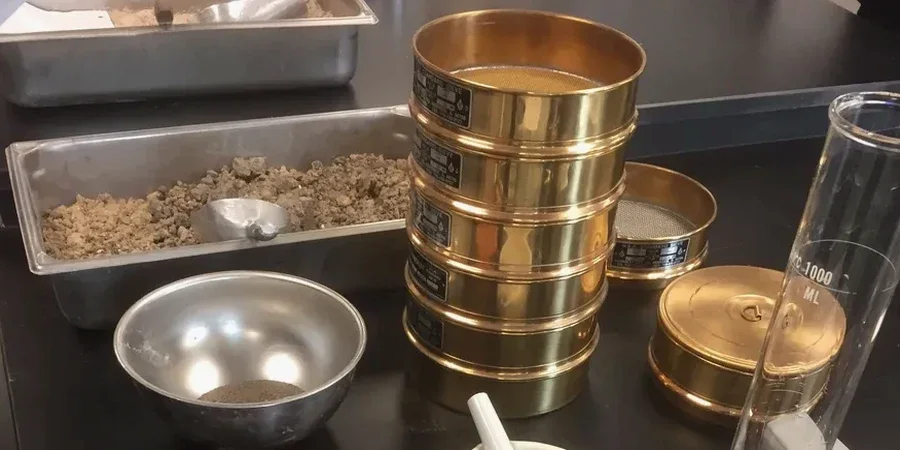
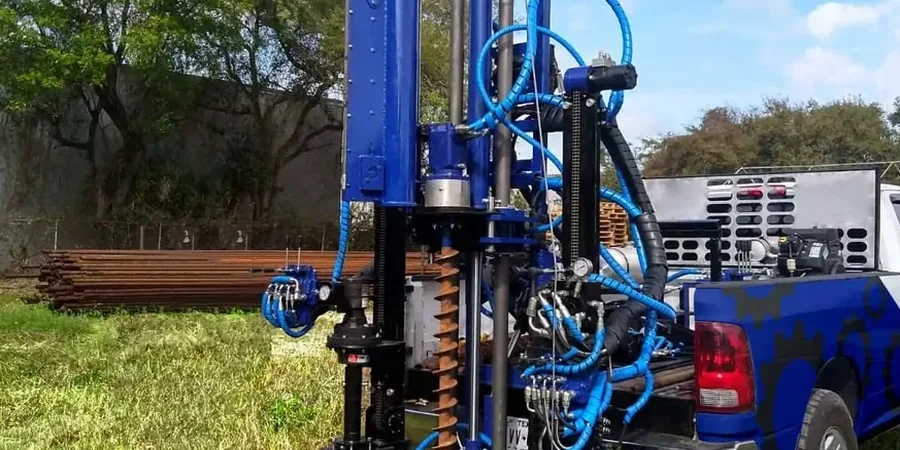
Santa Ana’s growth from a small agricultural town into Orange County’s second-largest city put heavy demand on land that was once orchard and floodplain — and that history left a patchwork of fill, buried organics, and variable alluvium that still surprises engineers today. The SPT procedure we follow uses a 140-pound safety hammer with auto-trip release, drilled through hollow-stem augers to keep the borehole open while we sample every five feet. Each split-spoon recovery goes straight into sealed glass jars, labeled with depth, date, and blow count, then logged against the USCS classification per ASTM D2487. When the stratigraphy looks inconsistent we recommend supplementing the SPT program with a grain-size analysis to pin down fines content and confirm whether that silty sand layer is really what it seems. Consistency in hammer energy matters more than most people think — our equipment stays calibrated to the ERi standard so N60 corrections aren’t a guess.
SPT Testing in Santa Ana, CA — Standard Penetration Test
Technical reference — Santa Ana

Site-specific factors

The Santa Ana River and Santiago Creek drainage built the subsurface profile over millennia, leaving behind loose saturated sands that the California Geological Survey maps in the upper 30 feet across much of the city. That puts liquefaction risk at the top of the conversation for any structure heavier than a single-family home. SPT blow counts below 15 in saturated sands demand a closer look — we flag those zones immediately and typically recommend running a liquefaction assessment using Seed-Idriss simplified procedure with the corrected N60 data. Seismic demands under ASCE 7-22 push Site Class D and E profiles toward deeper foundation solutions, and the SPT log becomes the single most important piece of paper on the engineer’s desk when that decision hangs in the balance. Missing a loose lens at 18 feet isn’t something you fix with a change order.

Need a geotechnical assessment?

Reply within 24h.

Email: info@geotechnicalengineering1.biz

Reference standards

ASTM D1586 — Standard Test Method for SPT and Split-Barrel Sampling, ASTM D2487 — USCS soil classification, ASCE 7-22 — Minimum Design Loads (seismic site class), IBC 2024 Section 1803 — Geotechnical investigations

Typical values

ParameterTypical value
Hammer typeSafety hammer, auto-trip, ERi calibrated
Borehole methodHollow-stem auger, 6-inch ID
Sampling intervalEvery 5 ft, continuous in critical zones
Sample recoverySplit-spoon, 18-inch drive, glass jar sealed
Blow count recordedN-value per 6-inch increment, N60 corrected
Soil classificationUSCS per ASTM D2487, field log + lab verify
Reporting standardASTM D1586, IBC Section 1803 compliance

Common questions

What does SPT testing cost for a single boring in Santa Ana?

For a standard SPT boring to 30 feet with sampling every 5 feet, the cost typically runs between US$590 and US$800 depending on access, traffic control requirements, and whether lab classification is included. Deeper borings or drill-rig moves across town add to the total, but that range covers most residential and light commercial scopes in Santa Ana.

How many SPT borings does the City of Santa Ana require for a new building?

The number depends on the structure footprint and site classification under IBC Table 1803.1. A single-story addition might clear with one boring, but a new commercial building over 5,000 square feet usually requires at least two borings spaced to capture variability — and Santa Ana Building Safety may ask for a third if the lot straddles mapped liquefaction zones.

Do you run SPT borings through asphalt and concrete in Santa Ana?

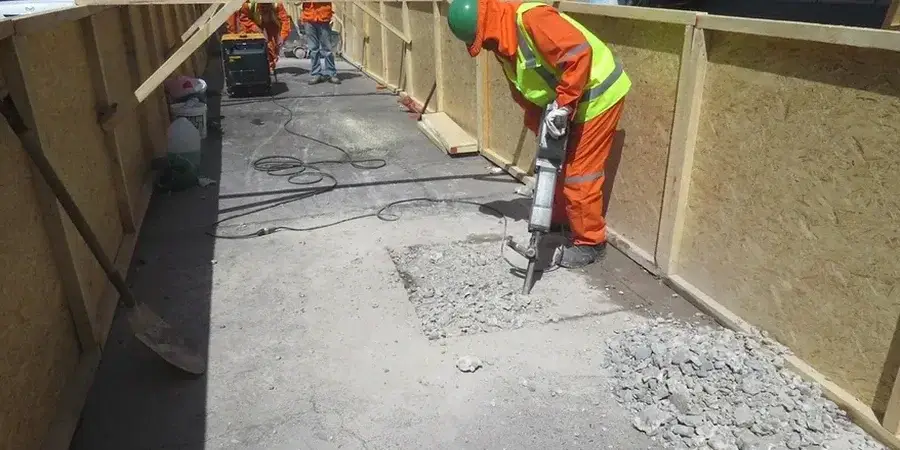
Yes, we core through pavement as part of the setup — most Santa Ana sites have existing slabs or asphalt that need to be penetrated before the hollow-stem auger goes in. The core hole gets logged separately and patched after the boring is complete, so the surface is left in workable condition.

Location and service area

We serve projects in Santa Ana and surrounding areas.

View larger map