GEOTECHNICALENGINEERING1
SANTA ANA
HomeFoundationsPile foundation design

Pile Foundation Design in Santa Ana: Geotechnical Reality Meets the Santa Ana River Basin

Geotechnical engineering with regional judgment.

LEARN MORE

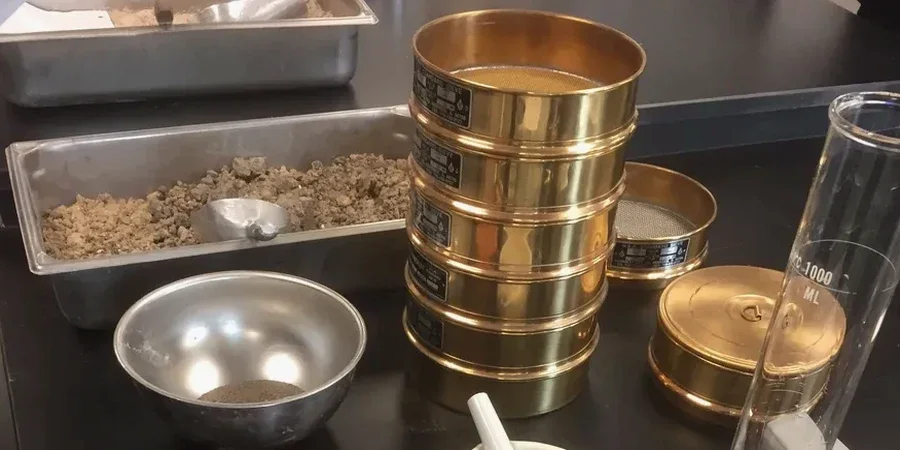
The geotechnical contrast between central Santa Ana and the areas bordering the Santa Ana River is stark. Near the river, you encounter loose, saturated alluvium; downtown, you find denser, older deposits with a higher sand content. This variability defines pile foundation design in Santa Ana. A single-family home near Delhi Park and a mid-rise on Main Street face completely different bearing strata. Our lab runs the in-situ tests that map this transition. We combine data from CPT testing to trace soft clay lenses with strength parameters from the triaxial test to model pile skin friction. The goal is not a generic design; it is a pile section that reflects the exact stratigraphic column under your site.

In Santa Ana, groundwater at 10 feet combined with loose alluvium means pile design is not about capacity alone—it is about accounting for downdrag and liquefaction in a single model.
Our service areas

Methodology and scope

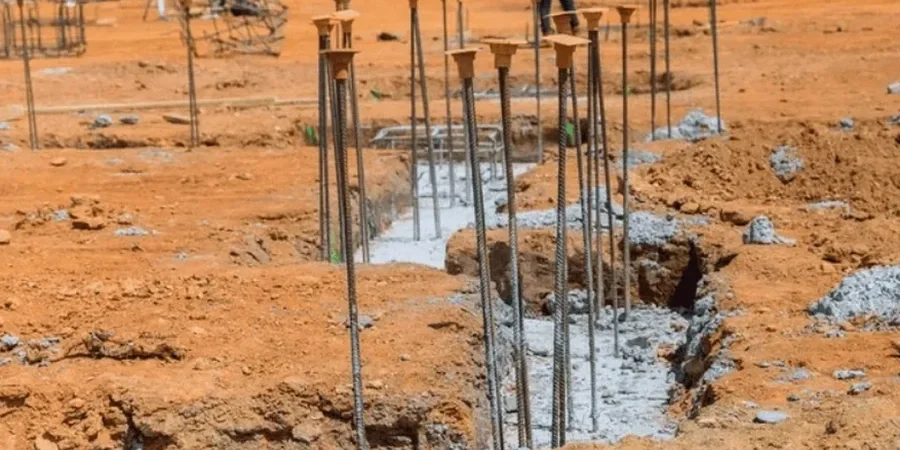
IBC Chapter 18 and ASCE 7-22 require a site-specific investigation for deep foundations, and in Santa Ana, this is non-negotiable. The city sits on the Tustin Plain, an alluvial basin where groundwater can appear at depths as shallow as 10 feet. Our pile foundation design process starts with the standard penetration test (ASTM D1586) to identify the depth of competent bearing material, typically dense sand or stiff silt found between 40 and 60 feet. We analyze negative skin friction potential, a real concern when pile shafts pass through compressible clays. For large commercial projects, integrating a seismic refraction survey helps us correlate the seismic velocity of deeper strata with the SPT data, refining the pile tip elevation and ruling out hidden boulder zones.
Pile Foundation Design in Santa Ana: Geotechnical Reality Meets the Santa Ana River Basin
Technical reference — Santa Ana

Site-specific factors

The upper 20 feet across much of Santa Ana consist of Holocene alluvium—loose, unconsolidated, and prone to liquefaction during a major seismic event on the Newport-Inglewood fault. A pile that terminates in dense sand at 50 feet must be evaluated for the loss of lateral support through the liquefied crust. Our team applies the Seed and Idriss method to estimate the residual strength of the liquefied layer and checks the structural integrity of the pile under lateral spreading loads. Ignoring this step can lead to pile head fracture at the cap connection, even if the axial capacity appears sufficient. For sites within the Santa Ana River floodplain, we also assess scour depth and recommend a minimum pile embedment below the calculated scour prism.

Need a geotechnical assessment?

Reply within 24h.

Email: info@geotechnicalengineering1.biz

Reference standards

IBC 2024 (Chapter 18), ASCE 7-22 (Seismic Provisions), ASTM D1586 (SPT), ASTM D2487 (Soil Classification), AASHTO LRFD Bridge Design Specifications

Typical values

ParameterTypical value
Bearing Stratum Depth40-60 ft (dense sand/silt)
Groundwater Table10-25 ft below grade
Skin Friction (Alpha Method)0.45-0.70 for soft to medium clay
End Bearing Capacity15-30 tsf (dense Pleistocene sand)
Lateral Load Analysisp-y curves per API RP 2GEO
Seismic Design CategoryD (ASCE 7-22, Sds ≥ 0.50g)
Negative Skin Friction ZoneUpper 15-25 ft

Common questions

What is the typical cost range for a pile foundation design study in Santa Ana?

For a standard residential or light commercial project, the investigation and design report typically ranges from US$1,770 to US$5,490. The final number depends on the number of borings, the depth required to reach competent bearing strata, and the complexity of the liquefaction analysis.

How deep do piles need to go in Santa Ana?

Most piles bear in dense Pleistocene sand or stiff silt at depths between 40 and 60 feet. However, the exact tip elevation is determined by the SPT N-values, which we measure continuously during drilling to confirm when adequate end bearing is achieved.

Does our project need a liquefaction analysis for piles?

Yes, if the site is in Seismic Design Category D, which covers the majority of Santa Ana. Loose saturated sands in the upper 20 to 30 feet are susceptible to liquefaction, and we must evaluate the loss of lateral support and the potential for ground settlement around the piles.

What QA/QC does your lab follow during the investigation?

Our laboratory operates under a quality management system aligned with ASTM E329 and AASHTO R18. We run calibration checks on the SPT hammer energy and perform moisture content and Atterberg limits tests on recovered samples within 24 hours of collection to ensure reliable data.

How is the pile type selected for a Santa Ana site?

The selection between driven H-piles, precast concrete, or cast-in-drilled-hole piles depends on the depth to bearing stratum, groundwater conditions, and site access. We compare the cost and performance of each type using the soil parameters from our lab testing program.

Location and service area

We serve projects in Santa Ana and surrounding areas.

View larger map