GEOTECHNICALENGINEERING1
SANTA ANA
HomeSlopes & WallsSlope stability analysis

Slope Stability Analysis in Santa Ana: Protecting Your Project on Variable Terrain

Geotechnical engineering with regional judgment.

LEARN MORE

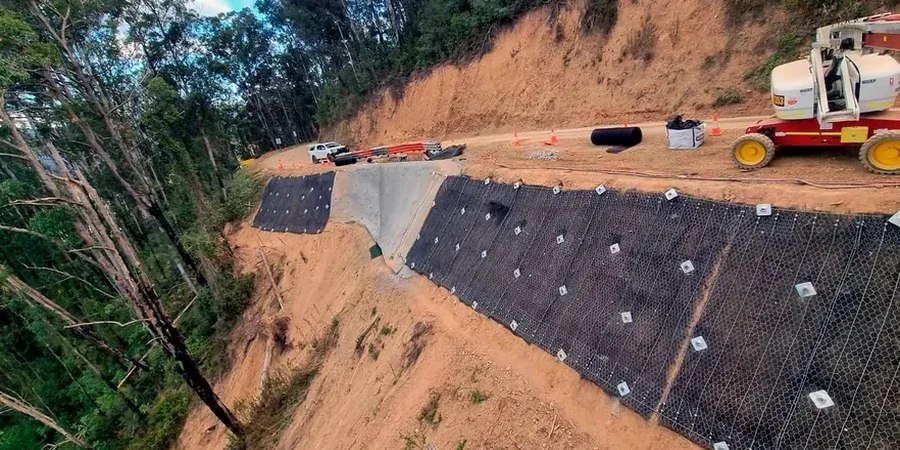
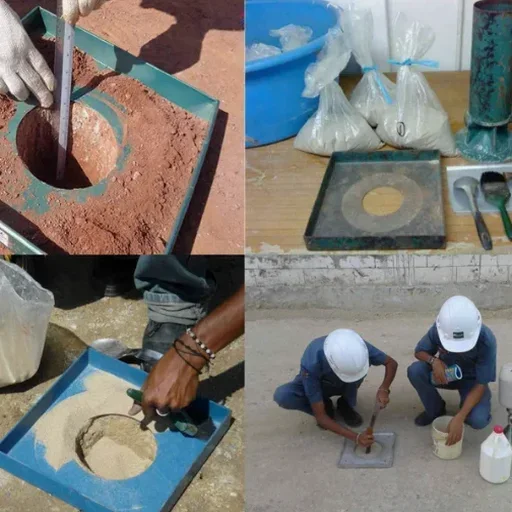
A developer broke ground on a three-level parking structure near the Santa Ana River channel last fall. The excavation exposed a sequence of loose alluvial sands and stiff clay seams that no desktop study had predicted. The geotechnical report flagged a daylighted slope with a factor of safety below 1.0 under saturated conditions. That kind of surprise stops grading permits cold. Slope stability analysis in Santa Ana has to reckon with exactly this: the city sits on a broad alluvial plain where soil profiles change abruptly over short distances, shaped by historic floodplain deposition and the distant uplift of the Santa Ana Mountains. When you combine cut slopes, retention systems, and the groundwater fluctuations common to central Orange County, the margin for guesswork disappears. Our team runs limit equilibrium modeling paired with site-specific shear strength data to give contractors and structural reviewers a defensible stability assessment. We often supplement the analysis with in-situ permeability testing to nail down the drainage assumptions that drive the pore pressure calculations, because a slope that drains is a slope that stands.

A slope with marginal static stability becomes critically unstable when pore pressures rise faster than the soil can drain, a condition we map explicitly for Santa Ana's winter storm cycles.
Our service areas

Methodology and scope

Santa Ana sits roughly 115 feet above sea level, but the topography varies enough across its 27 square miles to create genuine stability challenges. The western flats behave differently than the gently rising terrain east of the Costa Mesa Freeway, where older Pleistocene terraces introduce cemented conglomerates that hold near-vertical cuts temporarily, then ravel badly once they weather. Our analysis workflow starts with a site-specific shear strength program, running consolidated-undrained triaxial tests on undisturbed samples to capture both peak and residual strength envelopes. That data feeds 2D and 3D slope models where we test multiple failure surfaces, including deep-seated circles through weak clay layers and shallow translational slides triggered by irrigation overspray. For projects where retaining structures enter the picture, we integrate the slope model with a retaining wall design assessment to verify that the global stability check accounts for the wall's reinforcement geometry. Every model gets run under static, seismic, and rapid-drawdown conditions as required by the current California Building Code. The deliverable is a factor of safety table that the city's plan check engineers can review against the 1.5 minimum for permanent slopes.
Slope Stability Analysis in Santa Ana: Protecting Your Project on Variable Terrain
Technical reference — Santa Ana

Site-specific factors

The most common mistake we see on Santa Ana hillside jobs is treating fill compaction specs as a substitute for global stability analysis. A contractor will place engineered fill on a benched slope, hit 95% relative compaction on every lift, and assume the slope is stable because the density tests passed. But if the native ground beneath that fill contains a thin, slickensided clay seam dipping toward the cut face, the entire fill prism can mobilize as a block along that pre-existing weakness. We have mapped exactly this failure mechanism in several local subdivisions where ancient alluvial clay layers were overlooked during the preliminary investigation. The fix after slope movement starts is five times more expensive than the upfront analysis: you are looking at regrading, drainage retrofits, and possibly structural stabilization with drilled shafts. Running a rigorous slope stability analysis before grading begins costs a fraction of the emergency repair and keeps the project schedule intact. On sites with collapsible or soft native soils, we also recommend vibrocompaction treatment to densify the foundation zone before fill placement, eliminating settlement-driven tension cracks at the slope crest.

Need a geotechnical assessment?

Reply within 24h.

Email: info@geotechnicalengineering1.biz

Reference standards

ASCE 7-22 Minimum Design Loads and Associated Criteria for Buildings and Other Structures (Chapter 11: Seismic Design Criteria; Chapter 15: Seismic Design Requirements for Nonbuilding Structures), 2022 California Building Code (CBC), Title 24, Part 2, Chapter 18: Soils and Foundations, IBC 2021 Section 1806: Retaining Walls; Section 1808: Foundations, ASTM D1586 Standard Penetration Test (SPT) procedure for subsurface strength profiling, ASTM D2487 Unified Soil Classification System for stratigraphic characterization, FHWA Geotechnical Engineering Circular No. 3 (GEC3): LRFD Seismic Analysis and Design of Transportation Geotechnical Features and Structural Foundations

Typical values

ParameterTypical value
Minimum static FoS (permanent slope)1.5 per IBC 2022 / CBC
Seismic coefficient (kh)Site-specific per ASCE 7-22 Chapter 11
Analysis methods appliedBishop, Spencer, Morgenstern-Price
Shear strength inputCIU triaxial: peak & residual φ, c
Groundwater modelingSteady-state and transient seepage
Typical slope heights evaluated8 ft to 65+ ft cut/fill
Reinforcement integrationSoil nails, tiebacks, MSE walls
Software platformsSlide2, SLOPE/W, PLAXIS 2D

Common questions

What triggers a slope stability analysis requirement in Santa Ana?

The city follows CBC Chapter 18, which requires a stability analysis for any cut or fill slope steeper than 2:1 (horizontal:vertical) and taller than 15 feet, or any slope that could impact an adjacent property or public right-of-way. The grading plan reviewer also commonly requests an analysis when the proposed slope is within 50 feet of a structure, when groundwater is encountered within 10 feet of the cut face, or when the parcel is mapped within a potentially liquefiable zone per the County of Orange seismic safety element. Even if the code threshold is not met, many geotechnical consultants recommend a stability check on slopes over 10 feet in the alluvial soils west of the 5 freeway, where the clay content is high and drainage is slow.

How much does a slope stability analysis cost for a typical Santa Ana hillside lot?

For a single-family hillside lot in Santa Ana with a proposed 20- to 35-foot cut slope, the analysis typically ranges from US$1,440 to US$3,720 depending on the number of cross-sections modeled, the complexity of the soil profile, and whether the scope includes laboratory shear strength testing on undisturbed samples. A commercial subdivision with multiple slope benches and retaining walls will be at the upper end or beyond that range due to the additional modeling grids. We provide a fixed-fee proposal after reviewing the preliminary grading plan and any existing geotechnical data.

Do you model the effect of retaining walls on global slope stability?

Yes, we integrate the retaining structure directly into the limit equilibrium model. For cantilever and gravity walls, we define the wall as a rigid body with interface shear strength along the base and back of the wall. For mechanically stabilized earth (MSE) walls, we model the reinforced zone as a composite material with an equivalent friction angle, and we check both internal and external failure surfaces. The global stability check often governs the wall's foundation embedment depth, especially when the wall supports a sloping backfill. We coordinate these results with the wall's structural engineer to ensure the geotechnical and structural models use consistent load cases and safety factors.

Location and service area

We serve projects in Santa Ana and surrounding areas.

View larger map