GEOTECHNICALENGINEERING1
SANTA ANA
HomeUnderground ExcavationsGeotechnical analysis for soft soil tunnels

Soft Soil Tunnel Geotechnical Analysis in Santa Ana

Geotechnical engineering with regional judgment.

LEARN MORE

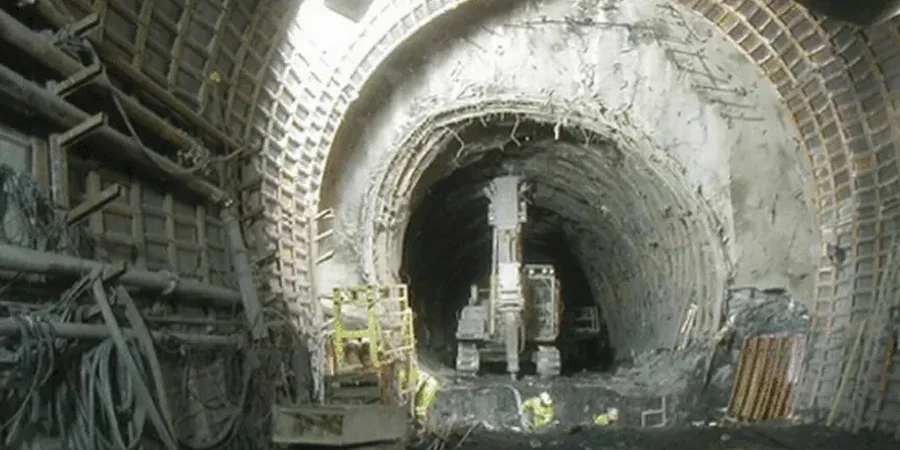
One of the costliest mistakes a contractor can make in Santa Ana is assuming the dense surface crust continues at depth. Beneath many parcels in this 27-square-mile city, particularly those near the old Santa Ana River floodplain, lies a sequence of compressible silts and clays that turns a straightforward tunnel drive into a ground-loss problem within hours. The Santa Ana basin sits on Quaternary alluvium that can lose significant shear strength when disturbed, and without a targeted geotechnical exploration program, settlement troughs appear where nobody predicted them. We combine CPT testing to map continuous stratigraphic changes with Atterberg limits for precise classification of the plastic silts common in central Orange County. The IBC requires a rational analysis of face pressure and crown stability before any tunneling shield advances, and our team integrates these results into deformation models calibrated for the local soil behavior that has challenged tunneling crews from the 5 Freeway expansion to recent light-rail extensions.

Soft-ground tunneling in Santa Ana is less about excavation speed and more about controlling the pore pressure response before the face even advances.
Our service areas

Methodology and scope

Santa Ana’s Mediterranean climate—with its concentrated winter rainfall and long dry summers—creates a seasonal groundwater oscillation that directly impacts tunnel face conditions in soft ground. When the water table rises during January and February storms, the effective stress in the silty matrix drops, and the stand-up time in an unsupported heading can shrink from hours to minutes. This is where a rigorous triaxial test program becomes essential: consolidated-undrained shear strength parameters under saturated conditions tell a very different story than values obtained from dry-season samples. Our laboratory operates under ASTM D4767 protocols for these determinations, and we cross-reference the results with field vane shear data where access permits. For tunnel alignments that pass beneath the historic downtown district or near the Santa Ana Civic Center, the influence of existing shallow foundations on the stress field cannot be ignored, which is why we frequently couple tunnel analysis with a mat foundations assessment to verify that adjacent structures remain within tolerable angular distortion limits defined by ASCE 7.
Soft Soil Tunnel Geotechnical Analysis in Santa Ana
Technical reference — Santa Ana

Site-specific factors

The equipment that reveals risk in Santa Ana soft-ground tunneling is not a single device but a coordinated array: piezometers sealed at multiple depths within the tunnel influence zone. When we install vibrating-wire piezometers in boreholes positioned along the proposed alignment and monitor them through at least one full hydrological cycle, the data often exposes a perched water table that borehole logs alone would miss. A contractor who relies solely on pre-excavation sampling without continuous pore-pressure monitoring operates blind to the rapid changes that occur when the tunnel face approaches a sand lens or an old buried stream channel—features surprisingly common in the Santa Ana alluvial fan. The consequence of inadequate monitoring is not theoretical; it manifests as a sudden face collapse that propagates upward, potentially daylighting as a sinkhole in a residential street or beneath a commercial building. Our approach embeds real-time piezometric data into the observational method framework, allowing face pressure adjustments before instability develops, not after.

Need a geotechnical assessment?

Reply within 24h.

Email: info@geotechnicalengineering1.biz

Reference standards

IBC (International Building Code, current Orange County adopted edition), ASCE 7 (Minimum Design Loads and Associated Criteria for Buildings and Other Structures), ASTM D1586 (Standard Test Method for Standard Penetration Test), ASTM D2487 (Standard Practice for Classification of Soils for Engineering Purposes), ASTM D4767 (Standard Test Method for Consolidated Undrained Triaxial Compression Test for Cohesive Soils)

Typical values

ParameterTypical value
Undrained shear strength (Su) of soft clay layers15–45 kPa (field vane / triaxial UU)
Overconsolidation ratio (OCR) in upper alluvium1.2–2.8 (oedometer per ASTM D2435)
Permeability coefficient of interbedded silts1×10⁻⁶ to 5×10⁻⁵ cm/s (lab & in-situ)
Face support pressure range (EPB analysis)0.8–1.8 bar (function of cover depth)
Maximum anticipated surface settlement<25 mm for closed-face TBM with real-time control
Atterberg classification of typical Santa Ana silty clayCL–CH transition, PI 18–35 (ASTM D4318)
Groundwater seasonal fluctuation range1.5–4.0 m below grade (USGS monitoring data)

Common questions

What is the typical budget range for a geotechnical investigation for a soft-ground tunnel project in Santa Ana?

The cost of a comprehensive geotechnical investigation for soft-ground tunneling in Santa Ana typically falls between US$3,940 and US$15,850, depending on the length of the alignment, the number of boreholes required to satisfy IBC spacing criteria, and the complexity of the laboratory testing program. A short pedestrian tunnel with two boreholes and basic index testing will be at the lower end, while a roadway underpass requiring CPT soundings, multiple triaxial suites, and piezometer installation across a full wet season will approach the upper range.

How do you determine the appropriate face pressure for an EPB machine operating in Santa Ana alluvium?

Face pressure is determined through a limit-equilibrium analysis that balances the active earth pressure plus the hydrostatic head at tunnel axis depth, adjusted for the undrained shear strength of the clay matrix. We run wedge and chimney stability calculations per the methods outlined in the technical literature, then calibrate the results against a finite-element model that accounts for the stress-path dependency of the local silty soils. The final pressure envelope includes a safety margin that reflects the observed variability in OCR across the Santa Ana basin.

What laboratory tests are essential for characterizing Santa Ana soft soils before tunnel design?

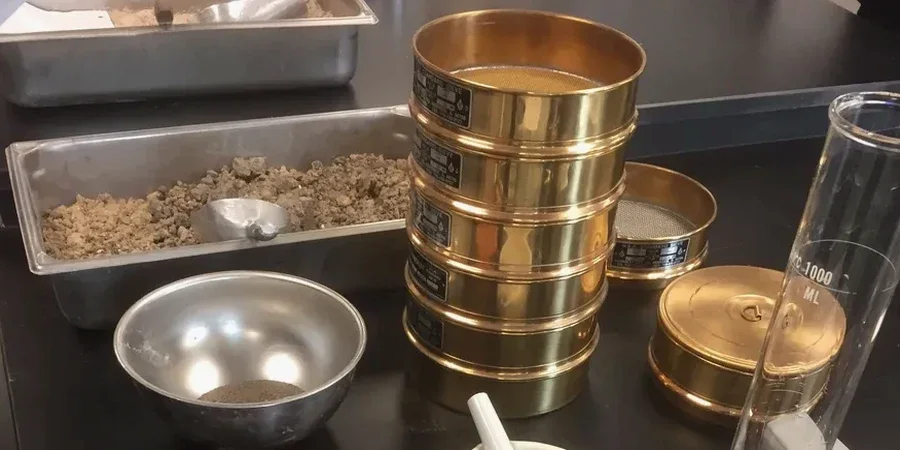
The essential suite includes Atterberg limits to classify the soil and assess its plasticity range, consolidated-undrained triaxial compression tests to obtain effective stress shear strength parameters, and one-dimensional consolidation tests to define the compressibility and overconsolidation ratio. For soils with significant silt content, we add hydraulic conductivity tests under expected in-situ stress conditions. These results feed directly into the constitutive model used for the deformation analysis required by ASCE 7.

How long does a complete geotechnical study for a tunnel alignment in Santa Ana usually take?

A complete study, from mobilization of the drilling crew to delivery of the final geotechnical baseline report, generally spans six to ten weeks. The field phase—borehole drilling, sampling, CPT soundings, and piezometer installation—typically requires two to three weeks for a mid-length urban alignment. The laboratory program runs concurrently, and the remaining time is devoted to analysis, numerical modeling, and report preparation. Projects that require a full wet-season groundwater monitoring cycle will extend the schedule accordingly.

Location and service area

We serve projects in Santa Ana and surrounding areas.

View larger map