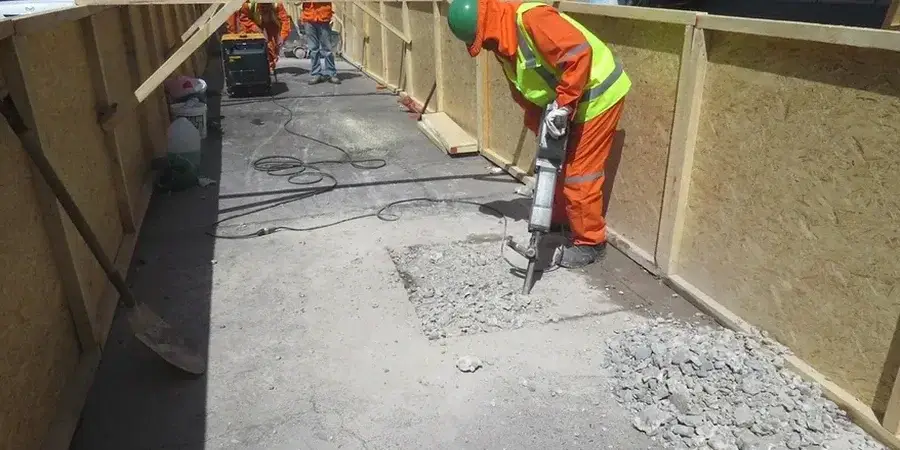
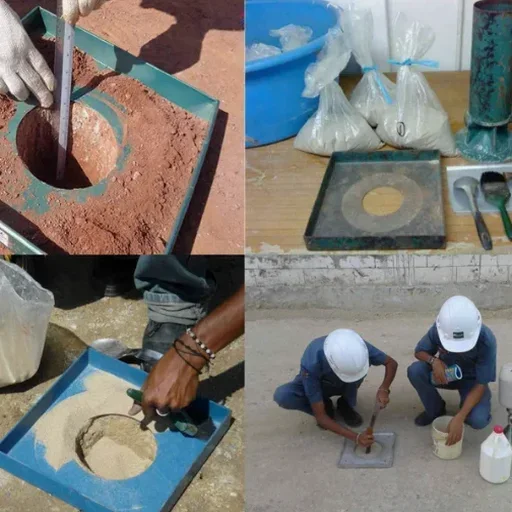
Santa Ana's subsurface profile is dominated by Quaternary alluvium from the Santa Ana River basin, with interbedded sands, silts, and clays that can vary within a single city block. These young sedimentary deposits, sitting in a seismically active basin just 12 miles from the Newport-Inglewood fault zone, demand rigorous compaction control during earthwork. The sand cone method per ASTM D1556 remains the most reliable in-situ verification we use on local projects, delivering a direct measurement of dry density and moisture content without the calibration drift that plagues nuclear gauges. In a city where groundwater can be found as shallow as 15 feet in the central corridor, proper compaction isn't just a specification box to tick—it's the first line of defense against differential settlement and seismic-induced consolidation. For deeper stratigraphic profiling beyond the compacted layer, we often combine density testing with SPT drilling to correlate surface compaction results with bearing capacity at foundation depth.
A sand cone test reads the density of the lift you just placed—not the one beneath it. In Santa Ana's stratified alluvium, that distinction matters.