GEOTECHNICALENGINEERING1
SANTA ANA
HomeLaboratoryLaboratory CBR test

Laboratory CBR Testing for Pavement Design in Santa Ana

Geotechnical engineering with regional judgment.

LEARN MORE

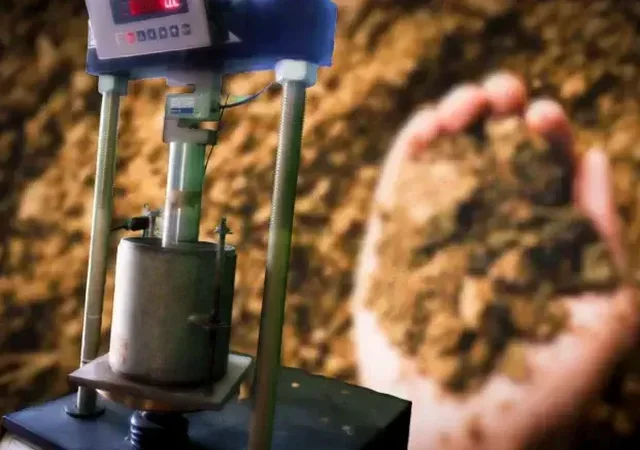
Santa Ana sits on a mix of young alluvial deposits and older terrace sediments, with groundwater levels that can rise to within 10 feet of the surface in the central basin during wet winters. This means subgrade soils often contain silty sands and low-plasticity clays that look firm when dry but lose significant bearing capacity with moisture. We run the laboratory CBR test under ASTM D1883 to quantify that behavior before pavement design. A compacted sample at optimum moisture content might hold up, but a soaked CBR value tells you what happens after a few storm cycles, and that difference can shift a pavement section by several inches of aggregate base. For projects near the Santa Ana River channel or in redevelopment zones with imported fill, we often pair this with a test pit investigation to confirm the stratigraphy before sampling.

A soaked CBR value of 3% in a silty subgrade can require nearly double the asphalt thickness compared to a 6% value—that difference is why we never skip the 96-hour soak.
Our service areas

Methodology and scope

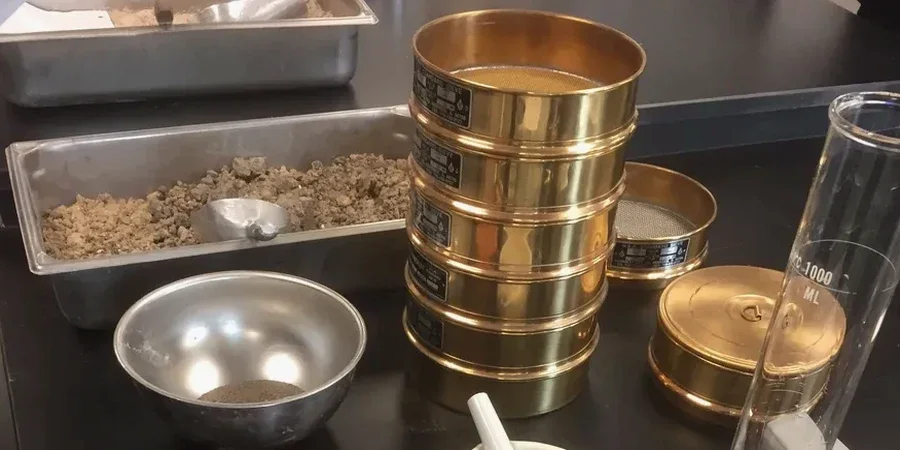
Orange County's Mediterranean climate creates a distinct seasonal moisture cycle that directly impacts the CBR test protocol. Summer temperatures above 90°F accelerate drying in undisturbed samples, so we control the curing environment tightly in our Santa Ana lab to avoid biased results. The standard procedure involves compacting the soil at the target density and moisture, then soaking it for 96 hours while measuring swell—a parameter that matters just as much as the CBR number itself in expansive silty clays found in parts of the city. For road rehabilitation along corridors like Bristol Street or Main Street, where existing base layers are variable, we also recommend grain size analysis to correlate fines content with strength reduction. When the subgrade shows borderline values below 5% CBR, we discuss stabilization options or a flexible pavement design adjustment that accounts for the reduced modulus.
Laboratory CBR Testing for Pavement Design in Santa Ana
Technical reference — Santa Ana

Site-specific factors

We reviewed a warehouse project off Grand Avenue where the geotech report listed an unsoaked CBR of 12% for the native sandy silt. The structural engineer used that value for the pavement design. Within two rainy seasons, the parking lot showed extensive alligator cracking and rutting near the loading docks. What happened was predictable: the soil lost cohesion when saturated, and the effective CBR dropped below 4%. The IBC requires pavement design based on soaked CBR values for precisely this reason, yet the distinction between as-compacted and soaked strength still gets overlooked in fast-track commercial projects. In Santa Ana, where the water table fluctuates and irrigation runoff is common, assuming dry conditions for a pavement that will see decades of service is a gamble that costs six figures to fix.

Need a geotechnical assessment?

Reply within 24h.

Email: info@geotechnicalengineering1.biz

Reference standards

ASTM D1883 – Standard Test Method for California Bearing Ratio (CBR) of Laboratory-Compacted Soils, AASHTO T 193 – Standard Method of Test for CBR of Soils in Place, IBC Section 1803 – Geotechnical Investigations for pavement subgrade classification, ASTM D698 / D1557 – Standard Proctor and Modified Proctor compaction methods for sample preparation

Typical values

ParameterTypical value
Standard referenceASTM D1883 / AASHTO T 193
Sample preparationCompacted at optimum moisture (Standard or Modified Proctor)
Soaking period96 hours with swell measurement
Penetration rate0.05 in/min (1.27 mm/min)
Surcharge weightSimulates overlying pavement mass (typically 10 lb annular)
Reported valuesCBR at 0.1" and 0.2" penetration, swell percentage

Common questions

What is the difference between soaked and unsoaked CBR, and which one does Santa Ana require?

The unsoaked CBR represents the soil strength at the compaction moisture content right after placement. The soaked CBR measures the strength after submerging the sample in water for 96 hours, simulating the worst-case saturation scenario. Santa Ana building departments follow the IBC and standard geotechnical practice, which require pavement design based on the soaked CBR value. The difference between the two can be dramatic in silty soils common to the area—an unsoaked 15% can drop to 3% or less when saturated.

How much does a laboratory CBR test cost in Santa Ana?

A standard laboratory CBR test on a remolded sample, including the Proctor compaction curve and the 96-hour soak with swell measurement, typically ranges from US$120 to US$190 per point depending on the number of points and the soil type. We provide a firm quote once we know the project scope and the number of subgrade materials that need characterization.

How many CBR test points do I need for a pavement design project in Santa Ana?

The number of points depends on the site variability and the size of the project. For a typical commercial lot or residential street in Santa Ana, we recommend a minimum of three CBR tests per distinct soil unit encountered in the borings or test pits. If the site crosses different alluvial zones or shows variable plasticity from the Atterberg limits, we increase the count to capture that range. The goal is to give the pavement engineer a statistically representative soaked CBR value, not just the best-looking number from one sample.

Location and service area

We serve projects in Santa Ana and surrounding areas.

View larger map