A common mistake we see from contractors in Santa Ana is assuming the native alluvial soils can support pavements and slabs without treatment. The silty sands and lean clays prevalent across the Santa Ana River floodplain often have plasticity indices between 12 and 25, which makes them prone to volume changes when moisture fluctuates. Without stabilization, you end up with cracked driveways, uneven warehouse floors, and settlement around footings within the first few years. That is why we always recommend a thorough evaluation before placing concrete or asphalt. Combining an initial soil sampling campaign with laboratory testing gives us the data needed to design an effective stabilization mix. The process saves clients from expensive repairs later.
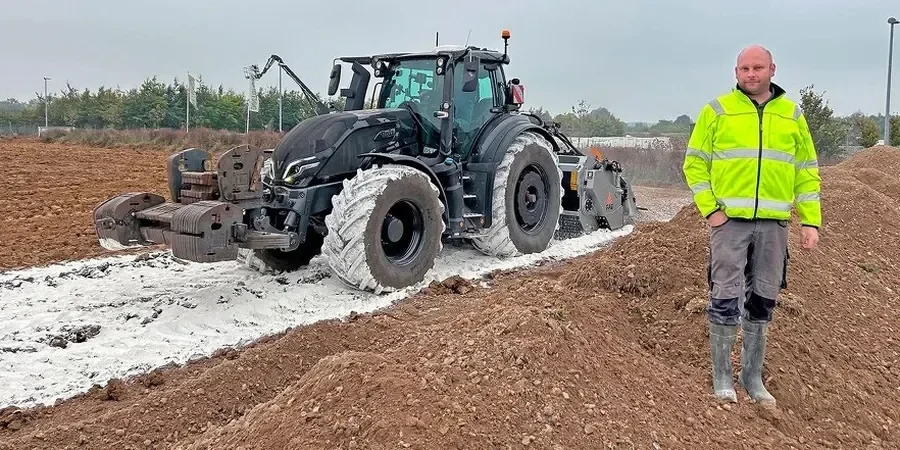
Stabilized soils in Santa Ana can increase CBR values from 5 to over 60, eliminating the need for costly imported base material.
Scope of work in Santa Ana
Risks and considerations in Santa Ana
Santa Ana sits in a semi-arid climate zone where annual rainfall averages only about 13 inches, but when it does rain, the storms can be intense. This creates a tricky condition for stabilization work: the soil profile is often dry and powdery at the surface but retains moisture at depth, especially after the wet season between November and March. If we apply lime or cement without accounting for that deeper moisture, the additive might not hydrate properly, leading to weak spots in the treated layer. On the other hand, applying too much water to compensate can cause the stabilized soil to become too plastic during compaction. The team on the ground has to monitor moisture content continuously throughout the mixing process to hit that narrow window of acceptability.
Our services
Our stabilization services in Santa Ana cover the full range of needs for residential, commercial, and infrastructure projects. Each application uses locally sourced additives and follows the same rigorous quality control process.
Lime Stabilization for Expansive Clays
Targeting the high-plasticity clays found in older alluvial terraces. Lime reduces plasticity index by 50-70% and improves workability.
Cement Stabilization for Silty Sands
For sandy soils common near the Santa Ana River, cement provides rapid strength gain and dust control during construction.
Combined Lime-Cement Treatment
A two-stage approach for soils with moderate plasticity. Lime pre-treatment modifies the clay fraction, then cement adds strength.
Subgrade Stabilization for Roadways
Designed for city streets and private access roads. We treat the top 12 inches of subgrade to meet Caltrans and local agency requirements.
Q&A
How much does lime or cement stabilization cost in Santa Ana?
For a typical residential lot or small commercial site in Santa Ana, the cost ranges between US$930 and US$2,470 depending on the area treated, depth of application, and additive quantity required. Larger commercial or roadway projects may reduce the per-square-yard cost.
What is the difference between lime stabilization and cement stabilization?
Lime works chemically with clay minerals to reduce plasticity and shrink-swell potential, making it ideal for expansive soils. Cement binds soil particles together through hydration, providing faster strength gain. The choice depends on soil type and project requirements.
How long does the stabilization process take on a typical Santa Ana site?
A standard 10,000-square-foot lot usually takes two to three days for mixing, compaction, and initial curing. Full curing before pavement placement requires at least seven days, during which the treated area must be kept moist.
Do I need a geotechnical report before starting stabilization work?
Yes, we recommend at least a basic soil classification and Atterberg limits test before designing the mix. Without knowing the natural moisture content and plasticity, you risk applying too little or too much additive, which can compromise the long-term performance.