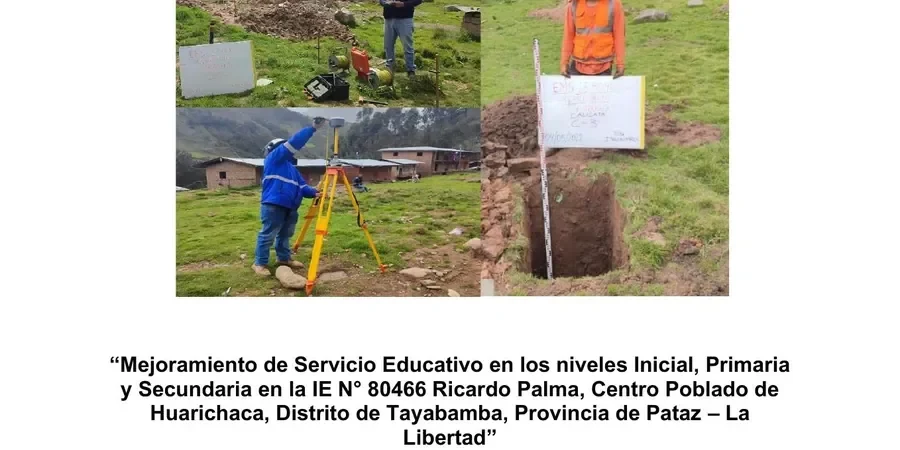
Field evaluation of collapsible soils in Santa Ana starts with a truck-mounted drill rig and a Shelby tube sampler. The rig advances a borehole through the alluvial terrace deposits common to the Santa Ana River floodplain. A thin-walled tube is pushed hydraulically into the undisturbed soil. The sample is extruded, sealed in wax, and transported to the lab within 24 hours. Once in the oedometer, the specimen is loaded to in-situ stress, then flooded. The collapse potential is calculated from the vertical strain under wetting. This test follows ASTM D5333 and the modified collapse index method. Before drilling, we review the site history — many lots in Santa Ana were filled decades ago with uncontrolled granular materials. That fill is exactly where collapse risk is highest. For shallow fill layers, we also run calicatas exploratorias to map lateral variability before deciding on borehole spacing.
A collapse potential above 6% from the double-oedometer test signals a real risk of differential settlement under wetting.
Scope of work in Santa Ana
Live process video
Risks and considerations in Santa Ana
A common mistake in Santa Ana is assuming all loose fills are stable because the lot looks flat. Builders skip the collapsible soil evaluation, pour a slab, and landscape the yard. Six months later, a broken irrigation line wets the subgrade. The soil structure collapses. The slab cracks at the corners. Doors jam. The owner calls a foundation repair company. The fix costs ten times what the evaluation would have. The problem is not low bearing capacity — it is sudden volume loss under wetting. Standard compaction tests on bulk samples do not catch this. Only undisturbed sampling and controlled flooding in the oedometer reveal the collapse potential. We have seen this sequence repeat in the Washington Square tract and along First Street. The soil there looks fine dry. It is not.
Our services
We offer four sub-services tailored to collapsible soil conditions in Santa Ana.
Undisturbed Sampling for Collapse Testing
Shelby tube and thin-walled piston sampling in alluvial and fill soils. Samples are extruded in the field, sealed, and transported to the lab for oedometer collapse tests.
Double-Oedometer Collapse Test (ASTM D5333)
Two identical specimens are loaded in separate oedometers. One is tested at natural moisture, the other is flooded at a target stress. The vertical strain difference gives the collapse potential.
Single-Oedometer Collapse Index
One specimen is loaded dry to a design stress, then flooded. The collapse index is calculated from the sudden deformation. Faster than the double-oedometer method but less conservative.
Field Compaction Verification for Remedial Fills
After collapse risk is identified, we test the recompacted fill using nuclear density gauges and sand cone tests. The target is 95% of standard Proctor maximum dry density at optimum moisture.
Q&A
What is the difference between collapsible soil and expansive soil?
Collapsible soil loses volume when wetted; expansive soil gains volume. Collapse is a sudden rearrangement of particles under load plus water. Expansion is a chemical reaction of clay minerals with water. Both cause differential settlement, but the mechanism and the test method are different.
How much does a collapsible soil evaluation cost in Santa Ana?
The typical range is between US$900 and US$2,430. The cost depends on the number of boreholes, the depth of sampling, and whether you need the double-oedometer or single-oedometer method. Contact us for a quote based on your project scope.
What collapse potential is considered dangerous for a residential slab?
Values above 6% in the double-oedometer test (ASTM D5333) are classified as troublesome. Above 10% is severe. For a residential slab on grade, even a 4% collapse potential can cause visible cracking if the wetting is localized under a single corner of the foundation.